

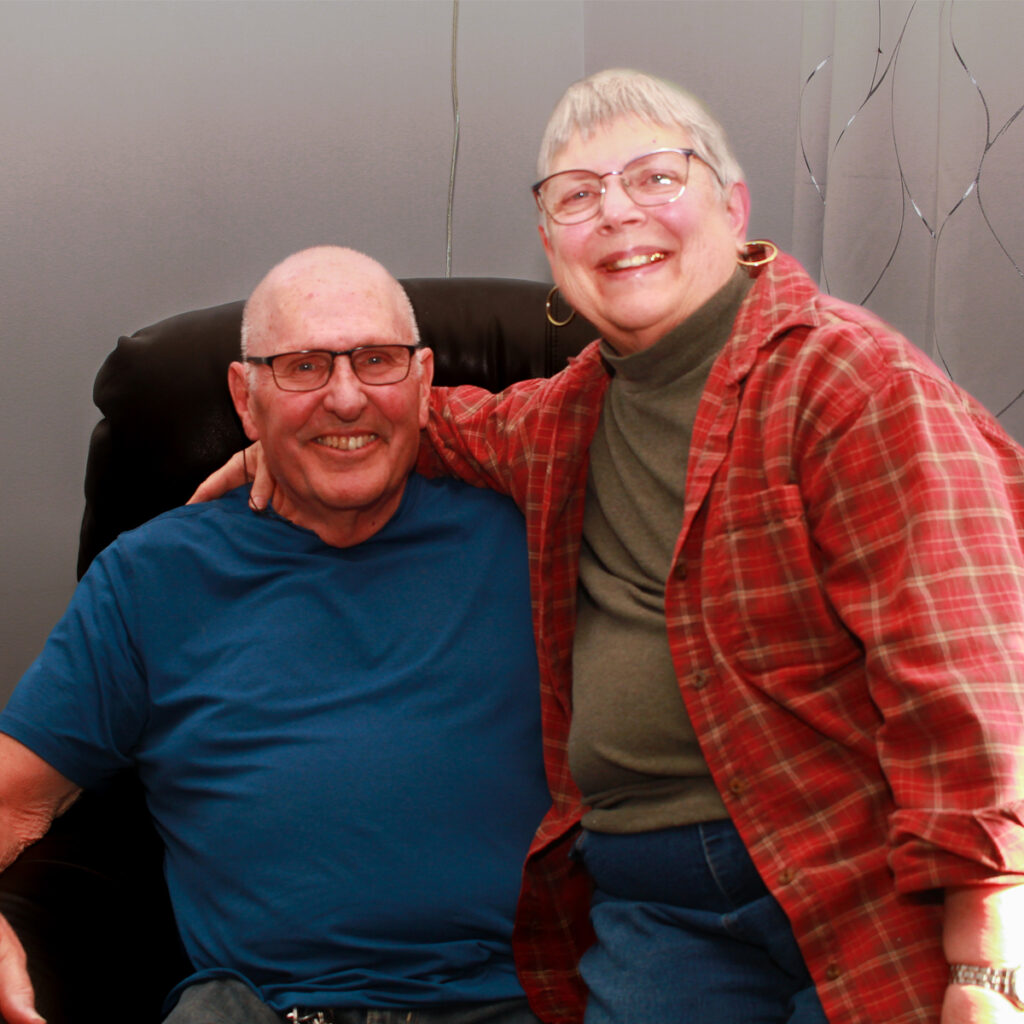
We Didn’t Speak the Same Language — But We Stayed
- Jo-Anne and Jesse Gilmore
We got involved through our church initially. Our church sponsored a family: a young mother, father, and three kids. That was the first family we volunteered for — they were from Kosovo.
After that, we found out about CCIS. One of the early employees went around to church groups looking for volunteers. That’s how we got hooked.
Then came our first family from Colombia. That was a hoot. We had a translator who was supposed to come. Beata was our coordinator. We all arrived at the doorstep — except for the translator, who couldn’t make it. We had a Spanish-English dictionary. This was well before Google Translate.
I had some high school Spanish, but you can tell by looking at me that was many eons ago. All we accomplished in that initial visit was the day and time we’d come back. And that was good enough.
We started working with them. They were part of a big social group of Colombians who all came at the same time. One time, we were invited to an apartment building near the old children’s hospital. The cooking was intense — searing meat as hot as you can. It smoked like crazy and set off the fire alarm. The whole building started to evacuate. The fire department came. It was just cooking smoke.
Another time, they had a turkey. They used an aluminum pan from the supermarket. When they removed it from the oven, it collapsed. Grease all over. Real fire. We just shut the door and smothered it. It blackened the ceiling. We brought brushes and rollers so they could repaint and get their damage deposit back.
Never again have we supplied a turkey without a proper roasting pan.
But what stayed with us most was the connection. We didn’t speak the same language, but they came back. There’s something called body language. The warmth in any language is the same. They saw that and returned.
Years later, one of their children invited us to her quinceañera (a traditional Latin American celebration symbolizing a girl’s transition from childhood to womanhood). That’s a big deal in their culture. And we were part of it.
I held one of their children when he was one day old. And we went to his 18th birthday party. That’s the reward. That’s what we get.
It’s fun. It’s connection. It’s being trusted.
And it’s knowing that even without words, you can still say: “We’re here. We care.”