Rural communities in Alberta are witnessing a unique opportunity for transformative change as they are called upon to explore innovative and authentic ways of connecting with one another, connecting with newcomers and collaborating to regenerate the social fabric of rural life. Guiding our rural practices, are CCIS’ mission, vison and values, our people-centric approach to service delivery, our unique staff and our community partnerships.
In the past year, Alberta’ statistics office reported record growth in secondary migration and international migration to Alberta. The larger urban centers like Calgary and Edmonton experienced the largest increase in population, along with increased challenges with housing and other resources. At the same time, small centers and rural communities further away are experiencing diminishing or stable growth. Our province grew by nearly 50,000 people in the first three months of 2024, a number that amounts to slightly more than 20 per cent of the gains across the nation, according to Statistics Canada data.
Approximately 81% of the population live in urban areas and only about 19% live in rural areas. The Calgary–Edmonton Corridor is the most urbanized area in Alberta and is one of Canada’s four most urbanized regions. How do we equalize the script? CCIS is uniquely positioned for this task because we are the only settlement service provider with comprehensive services in Calgary while also having key offices, outreach locations and local immigration partnerships in bedroom communities and smaller rural communities throughout Southern Alberta—serving immigrants, refugees, temporary workers, temporary residents, undocumented residents, and the community as a whole.
At CCIS, we are deeply committed to our work with communities and understand the importance of creating conditions that enable more equitable outcomes for communities and a stronger sense of belonging for all. Through a Hub-and-Spoke model with offices in over 11 locations to the west, east and south of Calgary, our settlement and integration services in the Rocky View region, Foothills, Willow Creek, Brooks and County, and beyond, support newcomer from varied immigrant pathways – Government-Assisted Refugees (GARs), Privately Sponsored Refugees (PSRs), Temporary Foreign Workers (TFWs), immigrants, asylum seekers, refugee claimants and more.
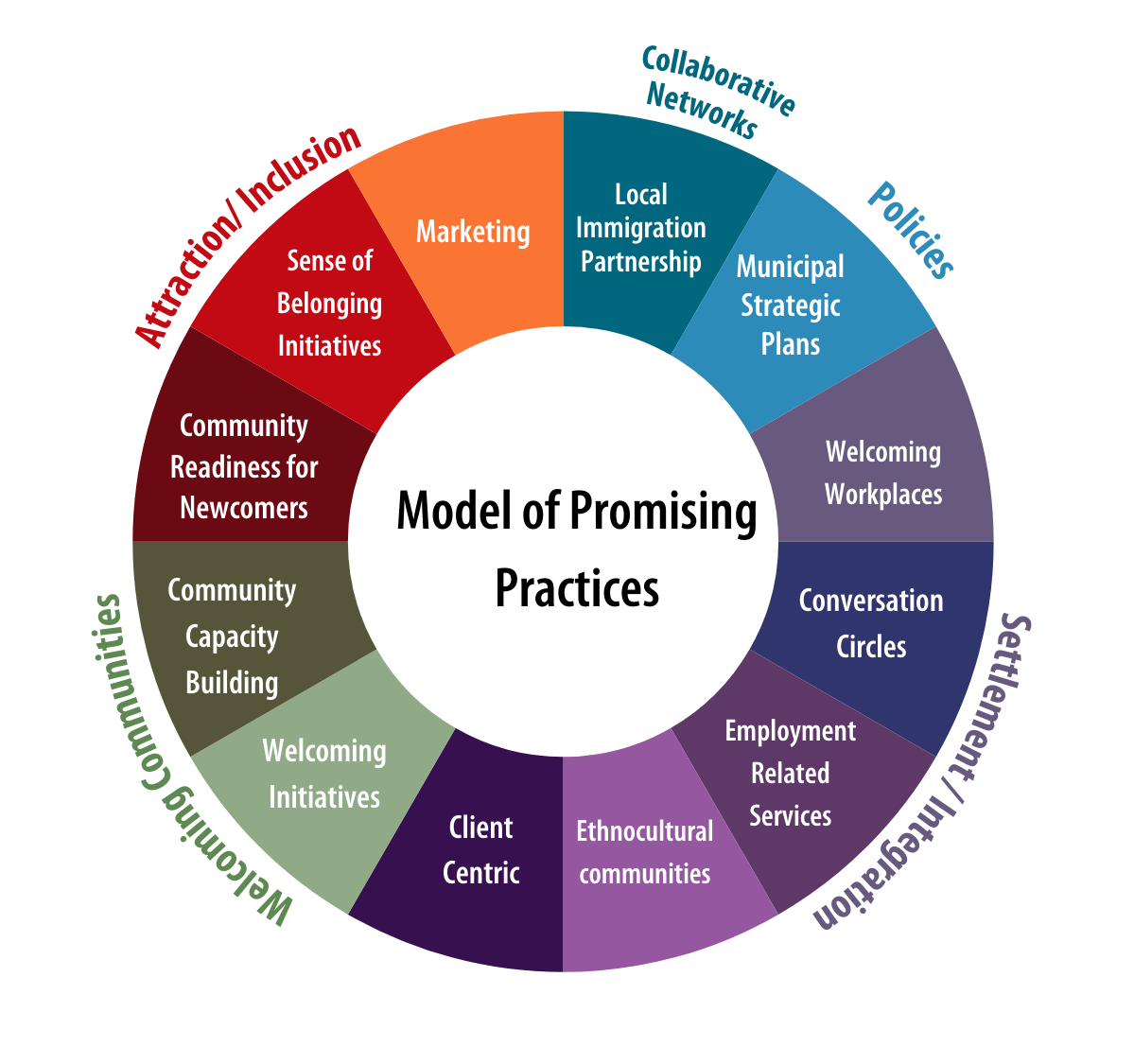
At the very core of what we do are PEOPLE, and while our settlement and integration work caters to the needs of newcomers, this work intertwines with the needs of the communities as well. Meeting communities where they are and initiating programs to assist with the attraction, retention, integration and inclusion of newcomers.
Our rural service delivery is predicated on the principle, “The Community is our Client.” A people-centered approach is at the core of our service delivery model. These principles enable us to work in ways to serve our clients effectively and to ensure our ongoing commitment to removing barriers to foster welcoming and inclusive communities for our clients.
To make settlement and integration work well for immigrants in the rural communities in which we operate, we have forged multiple levels of trusted strategic partnerships, diversified our programming and created a compelling vision for rural communities that involve best practices.
In the 2023-24 fiscal year, we set a target of 2,600 clients but served 2,878 in rural Southern Alberta, surpassing the target by over 10%. This can be attributed to the continued diversification of program delivery including those projects funded by the Federal, Provincial and municipal governments as well as private sponsors. These projects include the now concluded Welcoming Okotoks Project, our Rural Mentorship for Integration (RMFI) program, United Way Youth Initiatives in Foothills, the Ukrainian Rural Alberta Attraction Program and various Zonal Local Immigration Partnerships (ZLIPs) in the Foothills and Rocky View-Wheatland.
Basic settlement services in these communities include support for newcomers in areas such as housing, education, language assistance, employment, community connections, and emergency support. Programs also focus on integration and advocacy for migrant workers, resettlement assistance, and case management. Funded by various provincial and federal bodies, initiatives like the Rural and Northern Immigration Pilot (RNIP), mentorship programs, and welcoming projects aim to foster inclusion, economic recovery, and community readiness. Local Immigration Partnerships (LIPs) enhance settlement planning, while specific initiatives address anti-racism, Ukrainian resettlement, and multi-sector collaboration to attract and retain newcomers.
For over 16 years, our programs and services in rural areas have been driven by the dedication of our staff, who take on multiple roles, and the strength of our strategic partnerships. At the forefront of these efforts are our Local Immigration Partnerships which are currently leading the way in developing and shaping strategic partnerships and directions.
We have established a strong Medicine Hat Local Immigration Partnership and two unique Zonal Local Immigration Partnerships in the region, creating Partnership Councils in Foothills and Rocky View/Wheatland. These councils have fostered reciprocal Working Groups composed of diverse service and community-based partners. Through specialized programs, we have strengthened connections with municipalities, law enforcement, ethno-cultural groups, employers, and service clubs.
Notably, we partnered with the City of Medicine Hat to deliver the Welcoming Communities project in surrounding areas and collaborated with the Rural Development Network of Alberta and the Center for Civic and Religious Literacy to co-create a Rural Community Anti-Racism Framework. Additionally, our Rural Relocation Project for Ukrainians engaged over 10 communities, service providers, employers, and community groups across the province to expand resettlement support in rural Alberta.
Looking ahead, we aim to enhance newcomer attraction and retention in rural areas by facilitating multi-sectoral networks, fostering collaboration toward shared goals, and driving systemic change through partnerships. We will amplify regional voices by uniting key stakeholders to integrate newcomers into the fabric of rural communities. CCIS remains committed to addressing housing needs, supporting immigrants in finding meaningful employment, reducing discrimination, and combating isolation in rural areas. By focusing on engagement and belonging, we strive to empower newcomers to reach their full potential while revitalizing both urban growth and rural sustainability across Southern Alberta.
Ricardo Morales|| Director,
Community Development Integration Services & Southern Alberta Rural Projects