
CCIS at Metropolis Canada 2026: Contributing to the Conversation on Canada’s Immigration Future
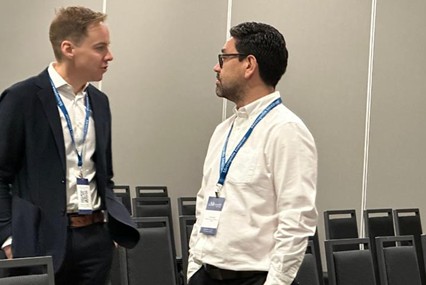
Last month, CCIS joined hundreds of immigration, settlement and policy leaders from across Canada at the 28th National Metropolis Canada Conference in Halifax, Nova Scotia. Themed Changing Course? Establishing Consensus on Canada’s Immigration Future, the three-day conference brought together government, researchers, frontline practitioners and sector leaders to explore how Canada can align its immigration vision with emerging realities and long-term national needs. CCIS participated as both a sponsor and an active contributor throughout the program.
Setting the Tone: Opening Conversations on Immigration
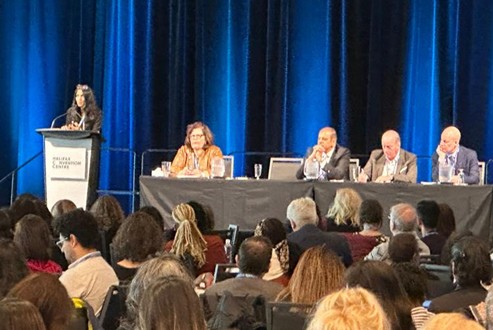
The conference opened with remarks from the Honourable Lena Metlege Diab, QC, Minister of Immigration, Refugees and Citizenship, who signalled a deliberate shift “from surge to stability” — stabilizing immigration levels, supporting those already here, and ensuring newcomers have the housing and services they need to succeed. The opening plenary, Making the Case for Immigration: The Medium and the Message, drew on historical data, public trust research, and media analysis to argue that Canada’s immigration conversations must be grounded in facts, coherence, and public education rather than political messaging. For CCIS, whose daily work depends on evidence-based policy and public trust, these were familiar and resonant themes.
CCIS Voices in Action: Employment, Pre-Arrival, and Labour Markets
Our Director of Business, Employment and Training Services (BETS), Hasmik Asmaryan, represented CCIS in two key sessions. In From Intention to Integration: The Power of Pre-Arrival Preparation, Hasmik contributed to a discussion on Canada’s coordinated pre-arrival ecosystem, highlighting how aligned messaging, consistent guidance, and timely labour market connections help newcomers arrive with greater clarity and confidence. In “Bridging Gaps, Building Futures: Tailored Pathways for a Changing Labour Market,” she joined cross-sector partners to explore how pairing labour-market intelligence with targeted training can accelerate newcomer employment in high-demand roles while building reliable talent pipelines for employers.
Supporting Temporary Foreign Workers
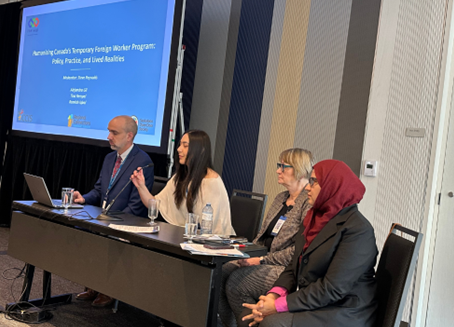
CCIS also brought a strong voice to conversations about temporary foreign workers. Program Manager Jessica Juen moderated Humanizing Canada’s Temporary Foreign Worker Program: Policy, Practice, and Lived Realities, a session that examined how clear information, community-based navigation, and responsive supports reduce vulnerability and improve outcomes for workers, employers, and receiving communities. Alejandra Gil from CCIS’s Temporary Foreign Workers program added frontline perspective alongside partners from Regional Connections Immigrant Services and the Saskatoon Open Door Society. Later in the conference, Jessica also participated in a national look at the Migrant Worker Support Program, demonstrating how wraparound support aligns workers, employers, consulates, and public systems so that people can navigate work and community life with clarity rather than guesswork.
Refugee Resettlement and Mental Health
Settlement Manager Bozana Sljuka from our Resettlement and Integration Services (RIS) division participated in Resettlement to Integration: Strengthening Support Systems for Refugees Experiencing Mental Distress Across Canada. Bozana presented on the realities facing Government-Assisted Refugees (GARs) arriving in Calgary, sharing key trends in arrivals, the diverse and complex needs clients present with, and how those needs shape specialized training for frontline staff. She underscored the value of trauma-aware practices, mentorship, and a strong community of practice — reinforcing how a coordinated, informed settlement system strengthens early integration and long-term wellbeing.
Rural Immigration: The Blueprint from Brooks and Beyond
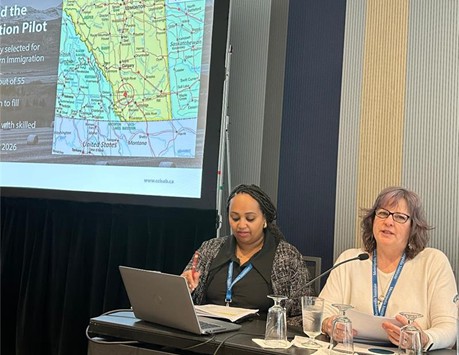
One of the conference’s most substantive sessions was led by our own team — moderated by Rodas Massey — on Reimagining Rural Immigration Pathways Through Municipal–Settlement Agency Collaboration. Mohammed Yusuf Idriss, Service Manager at our Brooks office (BCIS) and Deputy Mayor of the City of Brooks, made a compelling case that while immigration is national, integration is local, and that genuine municipal–settlement collaboration is not optional but necessary. Lisa Degenstein, our Rural Settlement Program Manager, highlighted Claresholm’s success as Alberta’s only community approved under the Rural Northern Immigration Pilot, sharing practical lessons for rural communities across the country. Panellists from the City of Brooks reinforced how sustained investment in inclusion — backed by a “Diversity is our Identity” brand and a cross-sector Welcoming and Inclusive Committee — has made Brooks a model of newcomer integration. The session also drew a policy perspective from IRCC on how settlement agencies in large cities can draw inspiration from the responsive, adaptable service delivery being done in communities like Brooks.
Closing Plenary: A Sector at a Crossroads
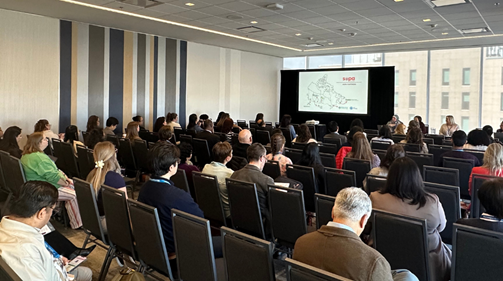
The conference concluded with a candid and forward-looking closing plenary that set out the road ahead plainly. IRCC’s Assistant Deputy Minister for Settlement and Integration acknowledged that federal settlement funding will be smaller over the next three years, while casting this moment as an opportunity to build a more sustainable, better-coordinated, and future-ready system. Voices from across the sector called for a shift from service delivery to system design, for protecting continuous newcomer pathways, and for ensuring the settlement sector has a genuine seat at the policy table. The message that closed three days of conversations was clear: the sector is not broken — it is being tested. How it responds collectively will shape the next chapter of Canada’s story as a nation built by newcomers.
CCIS: Bringing Front-Line Experience to National Dialogue
From pre-arrival services to refugee resettlement, from rural integration to temporary foreign worker supports, CCIS’s participation at Metropolis Canada 2026 reflected the breadth and depth of the work we do every day across Calgary and Southern Alberta. We are grateful to our colleagues, partners, and conference organizers for three days that were candid, constructive, and focused on what comes next. We look forward to carrying these conversations forward in our continued work to welcome, settle, and integrate newcomers across our communities.